Dust control tool review
DEWALT DWV010 HEPA Dust Extractor Review
Buy the DEWALT DWV010 if you renovate inside occupied houses and you want a vacuum that holds its suction all day and captures the dust that actually harms you, because automatic filter cleaning is the difference between a machine that works for an hour and one that works for a shift. Skip it if you mainly clean up chips and offcuts in a garage, because a shop vacuum at a quarter of the price does that job perfectly well.
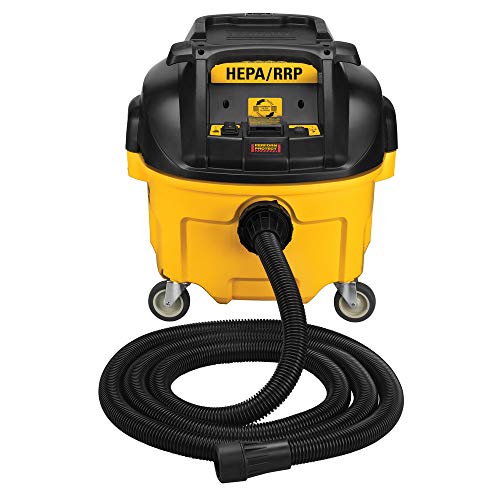
DEWALT DWV010 HEPA Dust Extractor, 8 Gallon
about $484
Check price on AmazonAs an Amazon Associate we earn from qualifying purchases, at no extra cost to you. Prices change; the figure above is what we last saw.
| Spec | DEWALT DWV010 HEPA Dust Extractor, 8 Gallon |
|---|---|
| Capacity | 8 gallons |
| Motor | 15 amp |
| Airflow | 150 CFM |
| Filter cleaning | Automatic, pulses every 30 seconds for continuous operation |
| Tool actuation | Powers the vacuum on and off with the connected tool |
| Hose | 15 ft anti-static, 1.25 inch diameter |
| Compliance | Meets the EPA Lead RRP rule for HEPA vacuums when using DWV9330 filters |
| Mobility | Heavy duty wheels and casters |
Specs come from DEWALT's published product bullets returned by the Creators API. Price is approximate.
Why automatic filter cleaning is the whole product
A shop vacuum pulling fine dust loads its filter within minutes, and once the filter loads, airflow collapses and the tool it is attached to starts spraying dust instead of collecting it. Most people never notice because they judge a vacuum by the noise rather than the airflow. The DWV010 back-pulses the filter every 30 seconds automatically, so airflow stays roughly constant through a session. On drywall sanding, concrete grinding and tile cutting, that is the difference between dust collection and the appearance of dust collection.
The dust that actually matters
Three kinds of renovation dust are genuinely hazardous rather than merely annoying. Respirable crystalline silica from concrete, mortar and tile causes silicosis and lung cancer. Lead dust from paint in homes built before 1978 is a documented neurotoxin, particularly for children. Asbestos in older flooring, insulation, textured ceilings and roofing products causes mesothelioma. A HEPA filter matters for the first two, and for the third the correct answer is not a vacuum at all: asbestos is licensed abatement work in most jurisdictions and should never be disturbed by a homeowner. Price that properly in the asbestos removal cost calculator rather than improvising.
The lead rule, and why the filter part is specific
DEWALT states the DWV010 meets the EPA Lead Renovation, Repair and Painting rule for HEPA vacuums only when DWV9330 filters are fitted. That "only when" is doing real work: putting a cheaper filter in the machine takes it outside that claim. If you are working in a pre-1978 home, either test the paint, or assume lead and follow lead-safe practices, or hire an EPA certified renovation firm. Sanding painted trim in an old house without knowing what is in the paint is the most common way this goes wrong.
Which jobs it pays for itself on
Drywall finishing, popcorn ceiling removal, tile and masonry cutting, concrete grinding before a floor coating, and any sanding inside a house that is still being lived in. It pairs directly with a drywall sander on a drywall job priced here, a tile saw and a track saw. If the job in front of you is a textured ceiling, our popcorn ceiling removal vs cover cost comparison is where to start, because covering it is often both cheaper and safer than removing it, and the popcorn ceiling removal cost calculator prices the removal route.
The honest weakness: expensive filters and a small tank
HEPA filters are consumables and DWV9330 replacements are not cheap, which means the running cost of this machine is meaningfully higher than a shop vacuum. Eight gallons is also modest for renovation debris, so on a demolition day you will empty it repeatedly, and using it as a debris vacuum rather than a dust vacuum shortens filter life fast. Fleece bags help enormously and add cost. It is also loud, and it is heavy for its capacity. None of that is a defect, it is what a proper extractor costs to run, but the sticker price is not the whole price.
What owners consistently report
Published owner reviews describe the automatic filter cleaning as the feature that justifies the price, and describe the tool actuation as the feature they did not expect to use constantly. The most common complaints are filter cost, tank capacity and noise. Several long-term owners note that using fleece collection bags rather than filling the tank directly is what keeps filters alive, and that using the machine for wet pickup or bulk debris is the fastest way to ruin an expensive filter.
Who it suits
- Renovation work inside occupied houses
- Drywall sanding, tile cutting and concrete grinding
- Anyone working in homes built before 1978 where lead paint is possible
- Owners of track saws, sanders and grinders with dust ports
Who should skip it
- General garage cleanup, where a shop vacuum is the right tool
- Wet pickup and bulk debris, which ruin HEPA filters
- Occasional users who will not buy fleece bags or replacement filters
- Asbestos work of any kind, which is licensed abatement
Safety, stated plainly
A HEPA extractor is a control, not permission. Respirable crystalline silica from cutting or grinding masonry causes silicosis and lung cancer, and extraction plus a properly fitted respirator is the combination that protects you rather than either alone. Homes built before 1978 may contain lead paint, and disturbing it is regulated work in the United States: test, follow lead-safe practices, or hire an EPA certified firm. Suspected asbestos in flooring, textured ceilings, pipe lagging or older roofing must never be sanded, scraped or vacuumed by a homeowner: stop and call a licensed abatement contractor.
Alternatives worth comparing
about $449
Notably quieter and better integrated with sanders and track saws, which matters when the machine is running beside you all day in an occupied house.
View on Amazonabout $799
More capacity and higher suction with automatic filter cleaning, worth the premium only if you run it professionally rather than across a few projects a year.
View on Amazonabout $502
Nearly double the capacity with HEPA filtration and wet pickup, the better choice if your work is as much debris cleanup as fine dust control.
View on AmazonHow we researched this
We did not test the DEWALT DWV010 HEPA Dust Extractor, 8 Gallon in person, and nothing here is written as though we did. This review is drawn from the manufacturer's published specifications, the product's own documentation, and the consensus of published owner reviews, which is summarised as exactly that rather than presented as our own use. Specifications are sourced as noted under the table above, and prices are approximate and move. Cost figures elsewhere on this site are 2026 estimates, not quotes. This is researched information, not professional advice: anything touching electrical, gas, structural, roofing or hazardous material work should go to a licensed professional and through your local permitting process. For the cost side of this decision, see Removal vs Cover over.
Frequently asked questions
Is a HEPA dust extractor worth it over a shop vacuum?
For fine dust, yes, and the reason is airflow rather than filtration alone. A shop vacuum filter loads within minutes on drywall or concrete dust and airflow collapses, so the tool stops collecting. Automatic filter cleaning keeps airflow roughly constant through a session. For chips, offcuts and general cleanup, a shop vacuum is the right tool.
Does the DEWALT DWV010 meet the EPA lead rule?
DEWALT states it meets the EPA Lead Renovation, Repair and Painting rule for HEPA vacuums only when DWV9330 filters are used. Fitting a different filter takes it outside that claim. If you are working in a home built before 1978, test the paint or assume lead is present and follow lead-safe work practices, or hire an EPA certified renovation firm.
Can I use it for asbestos?
No. Asbestos removal is licensed abatement work in most jurisdictions and must not be attempted by a homeowner regardless of what vacuum is attached. Suspected asbestos in flooring, textured ceilings, pipe lagging or older roofing should be left undisturbed and assessed by a licensed contractor.
What does power tool actuation do?
The tool plugs into the extractor and the extractor starts and stops with the tool, then runs on briefly to clear the hose. In practice it means the extractor is always running when it should be, which matters more than it sounds because the usual failure with dust control is forgetting to switch it on.
How often do the filters need replacing?
It depends entirely on what you collect. Using fleece collection bags rather than filling the tank directly extends filter life substantially, and using the machine for wet pickup or bulk debris shortens it dramatically. Treat HEPA filters as a running cost when you compare this against a shop vacuum.