Decking tool review
DEWALT DWE7491RS Table Saw Review
Buy the DEWALT DWE7491RS if you are about to rip a lot of deck boards, sheet goods or trim and you want a saw with a fence that stays square, because the rack and pinion fence is the reason this saw has outlasted a decade of rivals. Skip it if your project is one small job, if you only crosscut, or if you have nowhere to store a 90 pound saw and stand between projects, because a sliding miter saw or a track saw will serve you better for less money and less floor space.
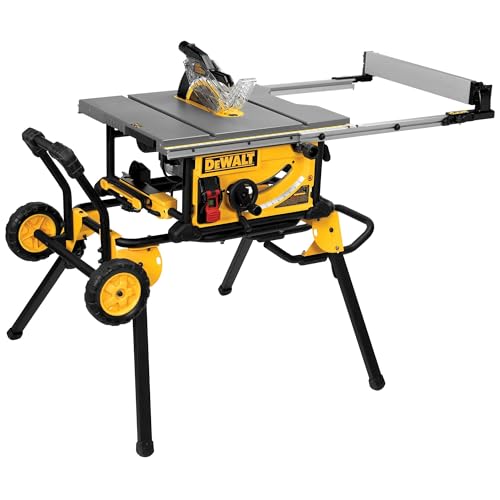
DEWALT DWE7491RS 10-Inch Jobsite Table Saw
about $599
Check price on AmazonAs an Amazon Associate we earn from qualifying purchases, at no extra cost to you. Prices change; the figure above is what we last saw.
| Spec | DEWALT DWE7491RS 10-Inch Jobsite Table Saw |
|---|---|
| Motor | 15 amp, 4,800 RPM |
| Blade | 10 inch, 24-tooth carbide included |
| Rip capacity | 32-1/2 inches |
| Depth of cut | 3-1/8 inches at 90 degrees, 2-1/4 inches at 45 degrees |
| Table size | 21-7/8 by 26-3/8 inches |
| Fence | Rack and pinion telescoping |
| Dust port | 2-1/2 inch, connects to a vacuum |
| Stand | Rolling stand included |
| Warranty | 3 year limited |
Specs come from DEWALT's published product bullets returned by the Creators API. Price is approximate and moves.
Why the fence is the whole story
Most jobsite table saws are let down in the same place: the fence racks out of parallel when you lock it, and every rip after that is slightly tapered. The rack and pinion system on the DWE7491RS moves both ends of the fence together, so it lands square and stays square without the tap-and-check ritual. That is the difference between a saw you fight and a saw you use, and it is why this model keeps getting recommended years after launch. If you are ripping composite or pressure treated boards to width for a deck frame, square rips are the difference between a rim joist that closes up and one that gaps.
Rip capacity, and why 32-1/2 inches matters
DEWALT publishes 32-1/2 inches of rip capacity, which means you can cut a full sheet of plywood or a sheet of subfloor down the middle without a helper holding the offcut. On the site that number decides whether you break sheets down on sawhorses first or feed them straight across the table. For decking and stair work it also lets you rip stringers and skirt boards from wide stock. If your work is mostly narrow trim, you are paying for capacity you will not use, and the DEWALT DWS779 miter saw is the better first purchase.
Does buying it beat hiring the job out?
This is the real question, and it is a number, not an opinion. A contractor quote for a deck is mostly labor, so the saw only pays for itself if you are doing enough of the work yourself to displace that labor. Run your actual size and material through the deck building cost calculator and compare the labor share against $599 plus lumber. On a small 10 by 12 deck the saw is a large fraction of the whole budget. On a 16 by 20 deck with stairs and a picture frame border it is a rounding error, and you will still own the saw afterwards. If you have not settled the material yet, our composite vs wood decking cost comparison is the decision that moves your budget far more than the saw does.
Dust, noise and where you can actually run it
The 2-1/2 inch port collects a useful share of the dust when it is hooked to a vacuum, and almost none when it is not. A shop vacuum will clog its filter quickly on fine sawdust; a proper extractor with automatic filter cleaning, like the DEWALT DWV010, holds airflow for far longer. If you are cutting inside a finished house, that difference is the difference between a dusting and a deep clean. Cutting pressure treated lumber outdoors is the better plan anyway, since the dust is not something you want circulating indoors.
The honest weakness: it is heavy, and the miter gauge is an afterthought
The saw and its rolling stand together are a genuinely awkward load for one person to get in and out of a vehicle or up a step, and the marketing word "portable" oversells that. The included miter gauge is also the weakest part of the package, with enough slop that crosscuts are noticeably less accurate than rips. Neither is a defect, they are the trade-offs of a jobsite saw, but if you were buying this expecting a precise crosscutting tool you will be disappointed. Crosscut on a miter saw and rip on this, and the pairing works.
What owners consistently report
Across published owner reviews the pattern is consistent: the fence draws the most praise, the weight draws the most complaint, and a recurring note is that the stock blade is adequate for framing lumber but is worth replacing with a higher tooth count blade for plywood and finish work. Owners also report the onboard storage for the guard, riving knife and push stick is used constantly, because a guard that lives on the saw is a guard that actually gets refitted.
Who it suits
- Deck, shed and framing projects with repeated rip cuts
- Anyone breaking down full sheets of plywood or subfloor
- A garage workshop where the saw needs to roll out of the way
- People who already own a miter saw and need the ripping half of the pair
Who should skip it
- One-off projects where a circular saw and a straightedge will do
- Work that is almost entirely crosscutting trim
- Apartments and shared spaces with no outdoor cutting area
- Anyone who cannot safely lift and move roughly 90 pounds of saw and stand
Safety, stated plainly
A table saw is the tool that hurts people, and almost always the same way. Kickback happens when the workpiece binds between the blade and the fence and is thrown back at you, so keep the riving knife fitted, keep the blade guard on for every cut that allows it, never rip freehand without the fence, never rip a board between the fence and the blade with a miter gauge at the same time, and use the push stick for the last foot of every rip. Stand out of the line of the blade, not behind it. Eye and hearing protection are not optional at 4,800 RPM.
Alternatives worth comparing
about $303
Half the price with a folding stand and a rack and pinion fence of its own, which makes it the sensible choice if this is a one deck decision rather than a tool you will use every year.
View on Amazonabout $729
Same saw and same fence on a scissor stand that sets up and folds faster, worth the premium only if you are loading and unloading it repeatedly rather than leaving it in a garage.
View on Amazonabout $139
If every cut on your list is a crosscut, this is the honest answer at a quarter of the price, because a table saw is a ripping tool first and a crosscutting tool a distant second.
View on AmazonHow we researched this
We did not test the DEWALT DWE7491RS 10-Inch Jobsite Table Saw in person, and nothing here is written as though we did. This review is drawn from the manufacturer's published specifications, the product's own documentation, and the consensus of published owner reviews, which is summarised as exactly that rather than presented as our own use. Specifications are sourced as noted under the table above, and prices are approximate and move. Cost figures elsewhere on this site are 2026 estimates, not quotes. This is researched information, not professional advice: anything touching electrical, gas, structural, roofing or hazardous material work should go to a licensed professional and through your local permitting process. For the cost side of this decision, see Composite decking vs Pressure-treated wood.
Frequently asked questions
Is the DEWALT DWE7491RS worth it for one deck?
Usually not on the saw alone. For a single small deck a circular saw and a straightedge will make the cuts, and the money is better spent on better boards. It becomes worth it when you have repeated rip cuts, a second project already planned, or sheet goods to break down. Price your own job in the deck building cost calculator and compare the labor you would displace against roughly $599.
DEWALT DWE7491RS vs DWE7491X: what is the difference?
The saws are the same. The RS ships with a rolling stand and the X ships with a scissor stand that deploys and folds faster. If the saw lives in a garage and rolls a few feet, the RS is the better value. If it goes in and out of a truck several times a week, the faster stand earns its extra cost.
Can it rip pressure treated deck boards?
Yes. The 15 amp motor and 3-1/8 inch depth of cut handle nominal 2x deck material comfortably. Wet pressure treated lumber is heavy and can pinch, so keep the riving knife fitted, support long boards with an outfeed stand or roller, and cut outdoors where the dust is not circulating in the house.
Do I need a dust extractor with it?
Not to make the saw work, but you will want one indoors. The 2-1/2 inch port is designed to connect to a vacuum, and a standard shop vacuum will collect dust until its filter loads up and airflow drops. An extractor with automatic filter cleaning holds suction for much longer, which matters most when you are cutting inside a finished room.
Table saw or track saw for plywood?
A track saw is safer and easier for breaking down full sheets alone, because the sheet stays still and the saw moves. A table saw is faster and more repeatable once the sheet is already cut into manageable pieces, and it is the better tool for narrow repeat rips. Many people end up owning both, and if you can only own one and your work is sheet goods, start with the track saw.