Insulation comparison
Spray Foam vs Fiberglass Insulation: Cost Comparison
Fiberglass slows heat moving through it. Spray foam does that and also seals air leaks, which is often the bigger share of a home energy problem. The price difference reflects that, and so does the installation risk.
Spray foam
$1.50 to $5 per sq ft
Fiberglass
$0.50 to $2 per sq ft
| Feature | Spray foam | Fiberglass |
|---|---|---|
| Cost per sq ft | $1.50 to $5 | $0.50 to $2 |
| R-value per inch | About 3.6 open cell, 6 to 7 closed cell | About 2.9 to 3.8 |
| Air sealing | Yes, that is the main benefit | No |
| Fills irregular cavities | Yes | Poorly, gaps are common |
| DIY possible | No | Yes for batts |
| Vapor control | Closed cell acts as a retarder | Needs separate detail |
| Re-entry after install | Ventilate per manufacturer guidance | Immediate |
| Removal if wrong | Very difficult and costly | Straightforward |
Spray foam
- Air seals and insulates in one operation
- Highest R-value per inch, useful in shallow cavities
- Fills irregular and hard to reach cavities completely
- Closed cell adds structural rigidity and vapor control
- Roughly three times the cost
- Requires a trained crew and correct conditions
- Bad installs cause odor and moisture problems and are hard to fix
- Difficult and expensive to remove
Fiberglass
- Lowest cost per square foot
- Batts can be a DIY job in an open attic
- Simple to inspect, replace and work around later
- Widely available and understood by every contractor
- Does nothing for air leakage
- Loses performance badly when compressed or gapped
- Damaged by water and by rodents
- Needs careful fitting around wiring and plumbing
The verdict
Choose spray foam for rim joists, crawl space walls, cathedral ceilings, and any cavity where air sealing and R-value per inch both matter. Choose fiberglass for open attics and standard stud bays where you can seal air leaks separately with caulk and foam sealant and then insulate cheaply on top. The highest-value work in most houses is neither: it is air sealing the attic plane and duct leaks first, which costs a fraction of either and often delivers more comfort. Use a contractor with specific spray foam training and ask about re-entry times.
Doing the insulation job yourself?
Amazon picks · SponsoredA contractor quote is mostly labor. If that estimate felt steep, here is the exact gear to tackle this job yourself. As an Amazon Associate we earn from qualifying purchases, at no extra cost to you.
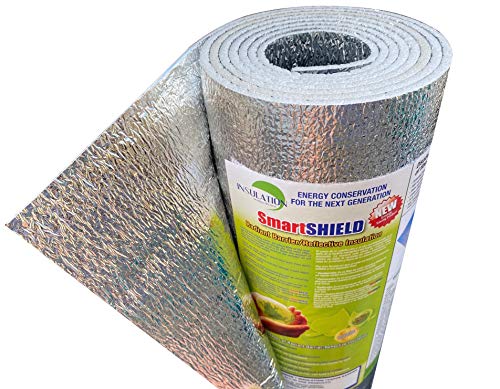
$12.95
Reflective foil board for walls, attics and crawl spaces
View on Amazon
$219.95
DIY closed-cell kit seals and insulates gaps and cavities
View on Amazon
$48.99
R-13 kraft-faced fiberglass roll for 2x4 walls
View on Amazon
$84.90
Rockwool mineral-wool batts for fire and sound insulation
View on AmazonFrequently asked questions
Is spray foam worth the extra cost?
In the right locations, yes. Rim joists, crawl space walls and cathedral ceilings are places where air sealing and high R-value per inch both matter and where fiberglass performs poorly. Across a large open attic, blown-in insulation over properly sealed air leaks usually delivers more R-value per dollar. Target the foam rather than foaming everything.
What can go wrong with spray foam?
The chemistry is mixed on site, and mix ratio, temperature and thickness per pass all have to be right. Errors produce foam that does not cure properly, which can leave a persistent odor and can trap moisture against sheathing. Correcting it means physically removing cured foam, which is slow and expensive. Choose an installer with manufacturer training and ask what conditions they will and will not spray in.
Do you have to leave the house during spray foam installation?
Manufacturers and installers specify a ventilation and re-entry period, and occupants are normally kept out during application and for a stated time afterwards. Ask for the specific figure in writing before work starts, along with how the space will be ventilated. This is a straightforward question that a competent installer answers immediately.
What is the difference between open cell and closed cell foam?
Open cell is lighter, softer, roughly 3.6 R per inch, permeable to vapor and cheaper. Closed cell is denser, around 6 to 7 R per inch, acts as a vapor retarder and adds rigidity, and costs more. Which is correct depends on the assembly and the climate zone, and getting vapor control wrong in a cathedral ceiling causes hidden rot, so this is a question for a contractor who knows local code rather than a preference.