Insulation comparison
Blown-In vs Batt Insulation: Cost Comparison
For an attic floor these are the two realistic options. Batts are cheaper on paper and blown-in almost always performs better in practice, because attics are full of obstructions that batts cannot fit around.
Blown-in
$1 to $3 per sq ft installed
Batts
$0.50 to $2 per sq ft
| Feature | Blown-in | Batts |
|---|---|---|
| Cost per sq ft | $1 to $3 installed | $0.50 to $2 |
| Fits around obstructions | Yes | Poorly |
| Real world vs rated R-value | Close | Often well below |
| Best use | Attic floors, existing wall cavities | Open stud bays and floors |
| DIY possible | With a rented blower | Yes |
| Adding more later | Easy, blow on top | Awkward to layer |
| Settling | Some, allow for it | None |
| Working in the attic afterwards | Messy, hides joists | Easier |
Blown-in
- Fills completely around joists, wiring and bracing
- Easy to top up an existing attic to a higher R-value
- Cellulose options use recycled content
- Delivers close to its rated performance in practice
- Higher installed cost
- Covers joists, which makes later attic work harder
- Settles somewhat, so depth must allow for it
- Needs baffles at the eaves to keep soffit vents clear
Batts
- Lowest material cost
- Genuinely DIY-able in an accessible attic
- Easy to move aside for later work
- No specialist equipment needed
- Gaps and compressions cut real performance sharply
- Awkward around wiring, pipes and bracing
- Hard to fit well in irregular spaces
- Layering to a higher R-value is fiddly
The verdict
Choose blown-in for an attic floor, especially an existing attic being topped up, where it fills around everything and reaches a genuine R-value. Choose batts for open, regular stud bays and floor joists you can access cleanly, or where the job is a DIY afternoon. Whichever you choose, air seal the attic plane first: top plates, plumbing and wiring penetrations, and the attic hatch. Insulation over unsealed air leaks is a well-known way to spend money and stay cold.
Doing the insulation job yourself?
Amazon picks · SponsoredA contractor quote is mostly labor. If that estimate felt steep, here is the exact gear to tackle this job yourself. As an Amazon Associate we earn from qualifying purchases, at no extra cost to you.
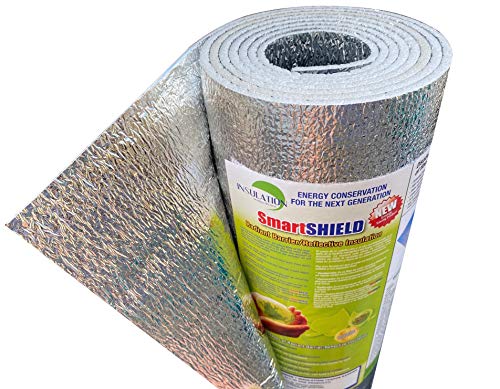
$12.95
Reflective foil board for walls, attics and crawl spaces
View on Amazon
$219.95
DIY closed-cell kit seals and insulates gaps and cavities
View on Amazon
$48.99
R-13 kraft-faced fiberglass roll for 2x4 walls
View on Amazon
$84.90
Rockwool mineral-wool batts for fire and sound insulation
View on AmazonFrequently asked questions
How much insulation does an attic need?
It depends on climate zone, and recommendations in cold regions commonly run to R-49 or R-60 at the attic floor. Measure your existing depth first, identify the material, and work out what you have before deciding what to add. Your local building department or utility efficiency program can give the figure for your zone, which is more reliable than a national average.
Should I remove old insulation before adding more?
Usually not, unless it is wet, moldy, rodent-contaminated or contains vermiculite. Blown-in insulation goes straight over existing material and adds to it. Vermiculite is the important exception: some of it contains asbestos, so it should be tested rather than disturbed, and remediation is a licensed job.
Can I install blown-in insulation myself?
Yes, many home centers rent the blower, and it is a common DIY project with two people, one feeding the machine and one in the attic. Wear respiratory protection, install eave baffles so soffit vents are not blocked, and keep insulation away from anything that needs clearance such as older recessed lights and chimneys. If the attic has knob-and-tube wiring, stop and get an electrician.
What is the single most cost-effective insulation improvement?
Air sealing the attic plane, usually. Sealing top plates, penetrations and the attic hatch with caulk and foam costs a fraction of adding insulation and often produces a bigger comfort improvement, because it stops conditioned air escaping rather than just slowing conduction. Insulation is the second step, not the first.