Water heater comparison
Gas vs Electric Water Heater: Cost Comparison
Gas and electric are the two main water heater fuels. Electric units cost a little less to buy; gas often costs less to run where natural gas is cheap. Here is the 2026 comparison.
Gas
$1,200 to $3,500 installed
Electric
$1,000 to $2,800 installed
| Feature | Gas | Electric |
|---|---|---|
| Installed cost | $1,200 to $3,500 | $1,000 to $2,800 |
| Running cost | Lower where gas is cheap | Depends on electric rate |
| Recovery speed | Faster | Slower |
| Install needs | Gas line + venting | Electrical circuit |
| Works in outage | Often yes | No |
| Efficiency option | Tankless gas | Heat pump (very efficient) |
Gas
- Cheaper to run where gas is inexpensive
- Heats water faster
- Often works during power outages
- Higher upfront cost
- Needs gas line and venting
- Burns fossil fuel
Electric
- Lower upfront cost
- Simple install, no venting
- Heat pump models are very efficient
- No combustion
- Running cost depends on electric rates
- Slower recovery
- No hot water in an outage
The verdict
Choose gas if you already have a gas line and local gas is cheap, for lower running costs and faster recovery. Choose electric for a lower upfront cost and simpler install, or go with a heat pump (hybrid) electric model for the lowest running cost where electricity is reasonable.
Every electric appliance you add spends the same panel headroom, so if an EV is also in the plan, read our ChargePoint Home Flex review and have the electrician run one load calculation covering both rather than two separate ones.
Doing the water heater job yourself?
Amazon picks · SponsoredA contractor quote is mostly labor. If that estimate felt steep, here is the exact gear to tackle this job yourself. As an Amazon Associate we earn from qualifying purchases, at no extra cost to you.
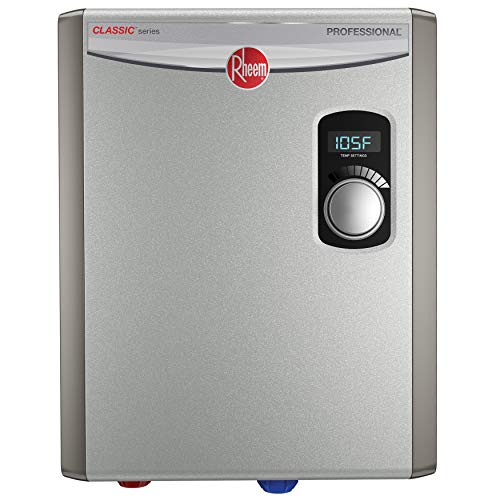
Self-modulating electric tankless, up to 4.4 GPM for whole-home hot water.
View on Amazon
$939.60
Standard tank replacement sized for a 3 to 5 person household.
View on Amazon
$40.49
Absorbs thermal pressure to protect the tank and plumbing, 3/4 in MNPT.
View on Amazon
$25.49
Cast-iron 8 to 14 in wrenches for water connections and fittings.
View on AmazonFrequently asked questions
Is a gas or electric water heater cheaper?
Electric units cost a little less to buy and install. Gas units often cost less to run where natural gas is cheap. Your local utility rates determine which is cheaper over the unit life.
Which is more efficient, gas or electric?
A heat pump (hybrid) electric water heater is the most efficient option overall. Among standard units, electric converts more energy to heat, but gas can still cost less to operate where gas prices are low.